Equipment Access for Elevated Work Zones
Lift Services in Twin Lakes for tree removal, trimming, and maintenance requiring safe access to heights above ladder reach
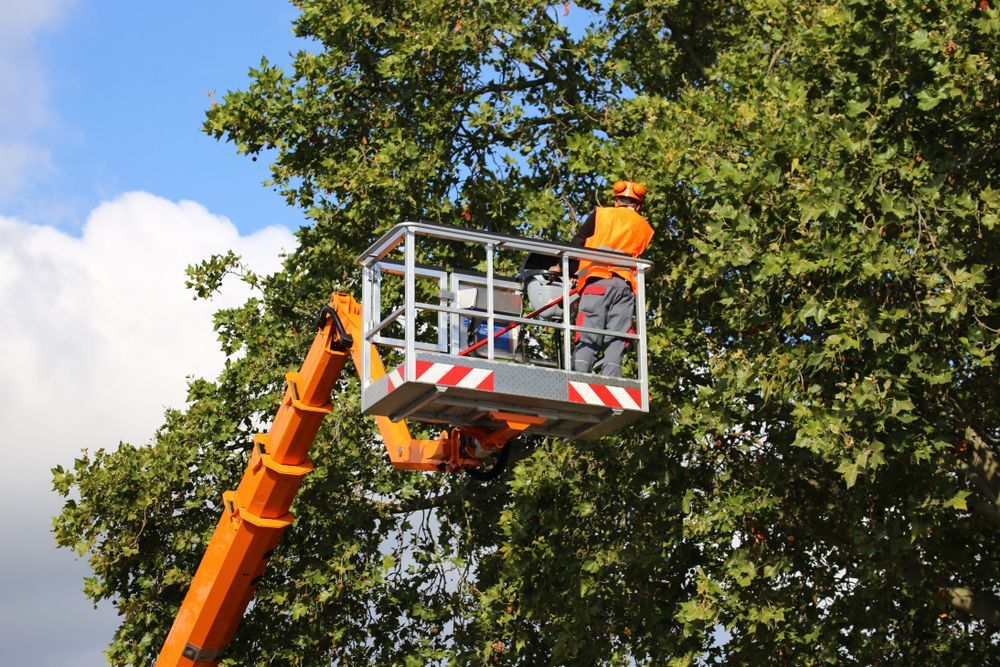
Trees positioned near structures, over driveways, or in areas where climbing would risk limb damage require mechanical lift access to position workers at the precise height and angle needed for controlled cutting. Advanced Tree and Stump Removal operates professional lift equipment that reaches upper canopy sections and extended limbs without requiring climbers to rig ropes or spur into the trunk, which damages bark and creates entry points for decay. You're seeing articulating boom lifts that maneuver around obstacles and provide stable platforms for chainsaw work, chipper feeding, and precision cuts that drop sections exactly where ground crews are positioned to process them.
Lift equipment stabilizes on outriggers that distribute weight and allow operation on sloped terrain or near property edges where vehicle access is limited, extending the range of projects that can be completed safely without resorting to felling entire trees from the base. The platforms rotate and extend independently, which means workers position themselves adjacent to the cut point rather than working at awkward angles that increase fatigue and reduce control. This capability matters most on complex removals where sections must be lowered by rope to avoid damage to landscaping, fencing, or structures directly below the work zone.
Contact Advanced Tree and Stump Removal to discuss site access and determine whether lift equipment is necessary for your specific tree work requirements.
Deploying lift equipment changes the approach to tree work by allowing workers to remain at working height continuously rather than climbing and descending repeatedly, which reduces time spent repositioning and increases the volume of work completed per day. Cuts are made from stable platforms rather than while balancing on limbs or hanging from ropes, improving precision and reducing the likelihood of errant cuts that create hazards or damage the remaining tree structure. The lift basket provides space for tools, rigging equipment, and cut sections, streamlining the workflow compared to ground-based operations that require constant coordination between climbers and ground crews.
After lift-assisted work is complete, you'll notice the surrounding landscape shows minimal disturbance compared to projects where large sections are felled and dragged across lawns or garden beds. The lift allows workers to dismantle trees in smaller, more manageable pieces that are handed off directly to chippers or stacked for processing, eliminating the ground impact caused by dropping heavy wood from height. Properties with irrigation systems, decorative plantings, or hardscaping near the tree benefit significantly from this controlled approach.
Lift services are billed based on equipment deployment and operational time, and the cost is justified on projects where climbing would be unsafe, where precision lowering is required, or where project timelines demand the efficiency that mechanical access provides. Smaller trees or those in open areas without obstacles may not require lift deployment, and the evaluation process determines which approach balances safety, efficiency, and cost for each specific situation.
Questions Before Starting Your Project
Residents across Twin Lakes frequently ask about lift capabilities, site requirements, and when mechanical access becomes necessary rather than optional.
What types of tree projects require lift equipment instead of climbing?
Trees with co-dominant trunks that would require workers to position themselves in unstable crotches, dead trees where climbing creates risk of limb failure, and removals near power lines where maintaining safe clearance distances is critical all benefit from lift access. Lifts also handle trimming jobs on large-canopy trees where dozens of cuts are needed across wide spreads.What types of tree projects require lift equipment instead of climbing?
How much space does lift equipment need to access a work area in Twin Lakes?
Articulating lifts require a travel path wide enough to accommodate the base unit—typically six to eight feet—and firm, level ground for outrigger placement. Soft soil, steep slopes, or narrow side yards may limit where equipment can be positioned, which affects which trees can be serviced and may require alternative rigging methods.
When is a lift more cost-effective than traditional climbing methods?
Projects requiring extensive work at height or where multiple trees are clustered in the same area allow lift costs to be distributed across higher productivity, often resulting in lower overall project costs despite equipment fees. Single small trees in accessible locations remain more economical to climb, and the decision depends on site-specific conditions and project scope.When is a lift more cost-effective than traditional climbing methods?
What happens if weather conditions prevent safe lift operation?
Wind speeds above twenty miles per hour create instability in elevated platforms and are monitored continuously during operation, with work suspended if conditions exceed safe thresholds. Rain and ice also affect traction and visibility, and lift operations are rescheduled when weather compromises safety regardless of project timelines.What happens if weather conditions prevent safe lift operation?
How does lift access affect the timeline for completing tree removal projects?
Lift-assisted removals often proceed faster than climbed removals because workers remain productive at height without the downtime associated with repositioning ropes and ascending between cuts. Complex projects near structures may still require careful rigging and sequential dismantling that extends timelines, but the lift eliminates climbing time as a limiting factor.How does lift access affect the timeline for completing tree removal projects?
Advanced Tree and Stump Removal evaluates each project to determine whether lift deployment improves safety and efficiency or whether alternative methods achieve the same results at lower cost. Arrange a site visit to review access constraints and equipment requirements for the tree work you're planning.