
Walls That Hold Slopes and Prevent Washouts
Retaining Walls in Twin Lakes for properties with uneven terrain and erosion control needs
Sloped yards in Twin Lakes often show signs of soil movement after heavy rain, with mulch washing down into lower areas and exposed root systems appearing along grade changes. Advanced Tree & Stump Removal builds retaining walls that hold soil in place and create usable flat areas on properties where elevation shifts make drainage management difficult. These structures redirect water flow away from foundations and prevent the gradual loss of topsoil that weakens landscaping over time.
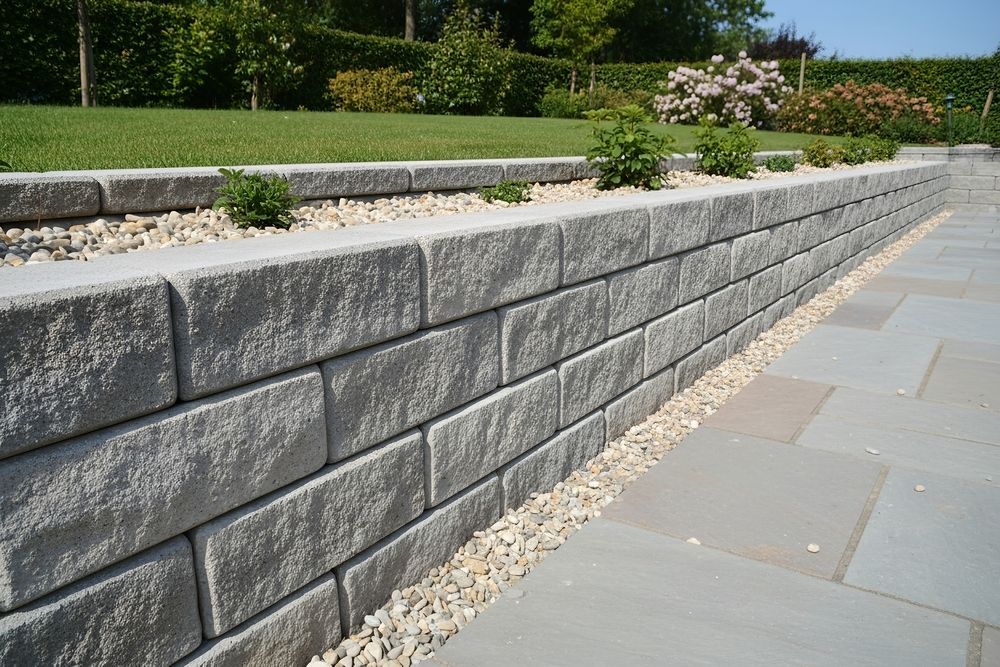
Retaining wall construction involves excavating to stable ground, setting a gravel base for drainage, and stacking materials in a way that counters lateral soil pressure without relying solely on weight. The design accounts for how water moves through soil layers during freeze-thaw cycles, which is critical in Wisconsin where frost heave can shift poorly anchored walls several inches each winter.
Request a site evaluation to determine wall height requirements and drainage integration options for your yard.
The wall's longevity depends on subsurface preparation that you never see once the project is complete. Compacted gravel behind the wall allows water to drop through layers instead of building hydrostatic pressure that pushes outward on the structure. Without this drainage pathway, even walls built with quality stone or block will eventually lean forward as saturated soil expands during wet seasons.
Once the retaining wall is finished, you'll notice that rainwater no longer carves channels down the slope and previously unusable areas become stable enough for planting or foot traffic. The grade change looks deliberate rather than accidental, and mulch stays where you place it instead of migrating downhill with each storm. Properties with retaining walls also show less settling around foundations because runoff is directed to planned drainage points instead of pooling against structures.
Advanced Tree & Stump Removal matches wall materials to existing landscaping elements and adjusts designs when underground utilities or tree root zones limit excavation depth. Some projects require stepped walls to manage significant elevation changes, while others benefit from curved layouts that follow natural contours and reduce the amount of soil disturbance needed.
What Property Owners Usually Ask
These questions come up frequently when planning retaining wall projects in Twin Lakes and surrounding areas.
What determines how deep the wall foundation needs to be?
Foundation depth depends on wall height and soil composition, with taller walls requiring excavation below the frost line to prevent seasonal movement that causes cracking or tilting over time.
How does a retaining wall improve drainage on sloped properties?
The wall holds soil at a controlled angle while integrated gravel backfill and weep holes allow water to pass through instead of building pressure, directing runoff to designated drainage areas rather than letting it erode pathways down the slope.
When is the best time to install a retaining wall in Twin Lakes?
Installation works best during dry months when soil compaction is easier to control and freeze-thaw cycles won't interfere with settling, typically late spring through early fall before ground temperatures drop consistently below freezing.
What materials hold up best in Wisconsin weather conditions?
Concrete block, natural stone, and pressure-treated timber all perform well when installed with proper drainage, though material choice often depends on wall height and whether the design needs to match existing hardscaping or remain visually subtle.
How long does a properly built retaining wall last?
Walls constructed with adequate drainage and frost-depth footings typically remain stable for decades, though surface materials may need occasional resetting if freeze-thaw cycles shift individual stones or blocks over many years.
Advanced Tree & Stump Removal provides design consultations that account for existing drainage patterns and property layout constraints. Schedule an estimate to review material options and grading solutions specific to your slope conditions.