
Structural Support That Prevents Split Trunks
Tree Cabling in Twin Lakes for mature trees showing trunk splits, weak branch unions, or storm damage
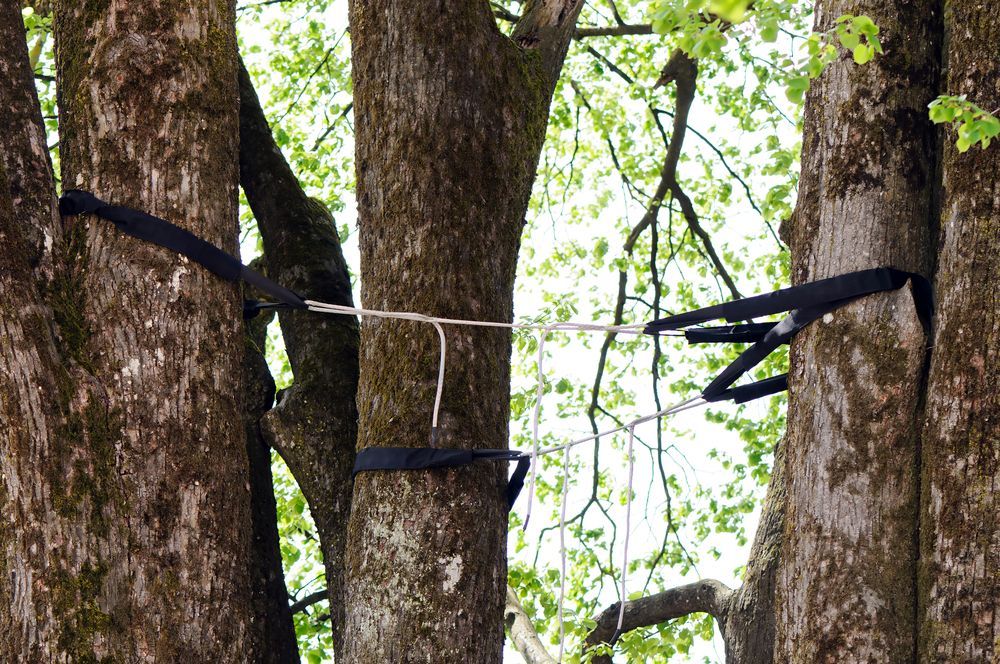
Mature trees with co-dominant trunks or large limbs positioned at narrow angles often develop structural weaknesses that lead to splitting during high winds or heavy snow loads. Advanced Tree and Stump Removal installs tree cabling systems in Twin Lakes that redistribute weight and reduce mechanical stress on weak unions, keeping valuable trees standing instead of scheduling them for removal. You'll see flexible steel cables anchored above the weak point, allowing natural movement while preventing catastrophic failure during storms that routinely move through southeastern Wisconsin.
Professional tree cabling uses dynamic support systems rather than rigid bracing, which means the tree continues to sway naturally while the cables limit extreme lateral movement that causes splitting. The cables are installed two-thirds up the length of the limbs being supported, high enough to provide mechanical advantage without restricting the tree's natural flex response to wind loads. This technique preserves trees that would otherwise require removal due to structural defects, extending their lifespan by decades when installed correctly.
Schedule a tree stability assessment to determine whether your property's mature specimens are candidates for cabling support.
The cabling process begins with identifying the specific failure point—whether it's a narrow crotch angle, a crack beginning to form in the trunk, or asymmetrical weight distribution caused by past storm damage. Cables are installed using through-bolts or eye-bolts positioned to create triangulation between weak limbs, with each anchor point drilled and secured to minimize bark damage while maximizing holding strength. The hardware and cable gauge are selected based on the tree species, limb diameter, and the degree of movement the tree experiences during typical wind events.
After installation, you'll notice the tree's canopy maintains its natural shape while the supported limbs no longer separate visibly during windstorms. The cables aren't meant to be invisible; they're functional safety systems that remain in place for the life of the tree, requiring periodic inspection to ensure bolts remain tight and cables haven't been compromised by growth or weather. Advanced Tree and Stump Removal adjusts tension as needed, particularly after the first growing season when trees settle into their new support configuration.
Not every tree qualifies for cabling—candidates must have sufficient wood quality to hold anchor bolts and enough remaining structural integrity to benefit from support rather than requiring full removal. Trees with advanced decay at the proposed anchor points or those already leaning heavily won't respond to cabling and represent ongoing hazards better addressed through removal. The evaluation process determines whether cabling offers genuine risk reduction or simply delays an inevitable failure.
What to Know Before Cabling Your Trees
Property owners across Twin Lakes often ask about cabling after noticing cracks forming in tree trunks or hearing wood creak during storms, and these questions clarify what the service involves and when it makes sense.
What types of trees benefit most from cabling?
Trees with multiple trunks originating from a single point, heavy horizontal limbs that lever against the main trunk, or species like silver maple and Bradford pear that naturally form weak crotch angles are the primary candidates. The wood must be sound enough to anchor bolts securely, so trees with visible decay or hollow sections won't hold the hardware safely.
How does cabling hold up during Wisconsin winter storms?
The flexible steel cable systems are rated for dynamic loading, which means they absorb sudden stress from ice accumulation and wind gusts without snapping or pulling free from anchor points. Properly installed systems continue functioning through freeze-thaw cycles that can compromise rigid bracing systems, and the hardware is corrosion-resistant to handle moisture exposure year-round.
When should cabling be installed instead of removing the tree?
Cabling makes sense when the tree provides significant shade, aesthetic value, or privacy screening that would take decades to replace, and when the structural defect is localized rather than systemic. If the tree's root system is compromised or if decay has spread throughout the canopy, removal becomes the safer option despite the tree's value.
What happens if a cabled tree continues growing?
Trees grow around the anchor bolts over time, which is expected and doesn't compromise the system's function. Cables may require tension adjustments every few years as limbs increase in diameter and weight distribution shifts, but the support system adapts to gradual growth without needing complete reinstallation.
How is tree cabling different from bracing or propping?
Cabling works by limiting the distance limbs can move apart, while bracing uses rigid rods installed through the trunk to physically hold sections together. Bracing is more invasive and used only when cabling alone won't address the structural defect, and propping with external supports is a temporary measure for emergency stabilization rather than a long-term solution.
Advanced Tree and Stump Removal evaluates structural issues before they escalate into emergency removals, and cabling systems are installed with attention to each tree's specific growth pattern and failure risk. Arrange a stability consultation to review which trees on your property would benefit from structural support and which require different management strategies.